Affichage des articles dont le libellé est USD 2013. Afficher tous les articles

mercredi 24 octobre 2012

2012-10-24 الدولار الأمريكي حول أعلى مستوى أسبوعيين قبيل قرار الفائدة الفدرالي

الدولار الأمريكي حول أعلى مستوى أسبوعيين قبيل قرار الفائدة الفدرالي
استقر الدولار الأمريكي حول أعلى مستويات منذ أسبوعيين مع ترقب المستثمرين قرار الفدرالي خلال الشهر الجاري و الذي من المتوقع أن يبقي سعر الفائدة عند مستويات 0.0-0.25% إذ من غير المتوقع أن يقوم البنك بتعديل سياسته النقدية خاصة بعد أن قرر في أيلول الماضي إضافة جولة ثالثة من التخفيف الكمي للاقتصاد لدعم وتيرة النمو الاقتصادي بقيمة 40 مليار دولار شهريا.


 و أكد البنك بأن سوف يواصل بهذه المنهجية لحين ما يظهر سوق العمل الأمريكي تحسن، و من المتوقع أن يبقى الهدوء سيد الموقف في أسواق العملات لحين صدور القرار بتمام الساعة 18:15 بتوقيت غرينتش،  و يتداول مؤشر USDIX حاليا حول 80.08 و سجل الأعلى عند 80.15 و الأدنى عند 79.83 مقارنة بسعر الافتتاح عند 79.92.


واصل زوج اليورو مقابل الدولار الأمريكي مسيرة الانخفاض نحو الأسفل بعد الانكماش الذي حصل في أداء قطاعي الصناعة و الخدمات خلال الشهر الماضي بوتيرة أسوا من التوقعات و الشهر الماضي، و هذا وسط تفاقم أزمة الديون السيادية في منطقة اليورو و قيام الحكومات الأوروبية بإقرار سياسات تقشفية صارمة لتخفيض العجز في الميزانية العمومية.


يزور محافظ البنك المركزي الأوروبي ماريو دراغي اليوم ألمانيا لمناقشة أسباب الخلاف بين الساسة الألمان حول برنامج شراء السندات الحكومية الذي أقره البنك المركزي في أيلول الماضي للسيطرة على الارتفاع الكبير في العائد على السندات الحكومية للبلدان الأوروبية التي تعاني من ارتفاع في تكاليف الاقتراض، و يتداول الزوج حاليا حول مستويات 1.2960 و سجل الأعلى عند مستويات  1.2995 و الأدنى عند 1.2960 مقارنة بسعر الافتتاح عند 1.2984.


يواصل الجنيه مقابل الدولار الأمريكي الارتفاع من أدنى مستويات سجلها خلال تعاملات الأمس لأدنى مستويات منذ سبعة أسابيع و هذا مع تصريحات محافظ البنك المركزي البريطاني ميرفين كينغ عن جاهزية البنك لأضافه المزيد من السيولة النقدية للاقتصاد الملكي في حال فشل الاقتصاد في تحقيق الانتعاش الاقتصادي، و يتداول الزوج حاليا حول 1.6002 و سجل الأعلى عند 1.6014 و الأدنى عند 1.5935 مقارنة بسعر الافتتاح عند 1.5950.


يتداول زوج الدولار الأمريكي مقابل الين الياباني ضمن نطاق ضيق جدا حول مستويات 79.80 قريبا من الحاجز النفسي للسعر عند 80.00 مع ميل المستثمرين لشراء الأصول ذات العائد المنخفض كملاذ أمان وسط تجدد المخاوف على مستقبل الانتعاش الاقتصادي العالمي.


دعم الزوج أيضا من الارتفاع الحاصل في مؤشرات الأسهم الأسيوية بعد بيانات قطاع الصناعة الصينية التي أشارت إلى تراجع وتيرة انكماش القطاع الهام في الصين ثاني اكبر اقتصاد عالمي، و يتداول الزوج حاليا حول مستويات 79.78 سجل الأعلى عند مستويات  79.91 و الأدنى عند 79.75 مقارنة بسعر الافتتاح عند 79.85.

dimanche 30 septembre 2012

FX Positioning and Technical Outlook: Stronger USD Ahead

If the third quarter was about the reduction of tail-risk by official actions, then Q4 will be about the limitations of the policy response.  It will pose a challenging investment climate after what turned out to be a favorable performance in Q3.  
Equities generally did well.  The US S&P 500 rose 5.75% in Q3.  The Dow Jones Stoxx 600 rose 6.9%, led by a 12.5% rally in Germany's DAX.  The MSCI Asia-Pacific Index rose also 12.5%, which is all the more impressive given that the Nikkei and the Shanghai Composite both fell (-1.2% and -6.3% respectively). 
Bond markets also did well, even though the benchmark 10-year US and UK yields did rise by a few basis points.  The anticipation of new supportive measures that were ultimately outlined in early September helped spark a sharp rally in Spanish and Italian debt markets.  Spanish 10-year yields fell 98 bp over the quarter, while Italy's 10-year yield fell 110 bp. Two-year yields fell 196 and 191 bp respectively.   Gold too rallied; appreciating 14.2% on the quarter.  The low and stable volatility was also an important feature of the global capital markets.  
There simply are too many brinkmanship games being played in the major financial centers to expect this to persist.  If Q3 was about positioning for the risk-on advance, then Q4 may be about protecting those gains.

In Q3, many fund managers that were underweight Europe, and speculative shorts, were forced to cover.  This theme is clearly evident in the futures market with the gross short euro contracts were slashed from 250k in early June to about 100k as of Sept 25.  However, as Q3 wound down, the tone in the market had already begun changing.  
Over the last two weeks (here and here), we have been observing a deterioration in the tone of the major foreign currencies against the dollar.  This has continued over the past week and looks set to continue, as we discuss below.    
The fourth quarter begins with a bang.  In the days ahead, four G10 central banks meet (RBA, BOE, RBA and BOJ) Japan releases its quarterly Tankan survey (early Monday), the US holds its first presidential debate and reports it employment figures at the end of the week.   
The backdrop and context that these events include the deterioration of the global economic outlook.  US economic data mostly has surprised to the downside.  The euro zone is contracting.  This in turn is weighing on industrial output in Japan, China, South Korea and Taiwan, for example.  Japan's economy may also be contracting.  The UK may be one of the few countries that growth likely improved in recent months.  After three quarters of contraction, it may have grown again, albeit slightly.  
The political backdrop may arguably be even worse.  The odds-on most likely scenario in the US is that Obama is re-elected and the Republicans hold the House of Representatives.   While most observers appear to believe the fiscal cliff will be avoided, the uncertainty related to the tax outlook, the debt ceiling already appears to be having a cooling effect on employment and business investment.  In addition, many businesses and investors are skeptical of the risk-reward of QE+.  Given this skepticism, the program that was meant to improve risk taking may result in its opposite, further driving the animal spirits into comatose state.  
In Europe, the Spanish and French 2013 budgets were greeted with a yawn.  Optimistic assumptions about growth, for example, allow officials to square the circle, and project meeting EU targets.  Overshoots are more the rule than the exception.   There is no closure yet on Greece and there may not be until November.  Spain's three-prong debt crisis (sovereign, regions, and banks) is also morphing into a constitutional crisis.  Prime Minister Rajoy meets with the regional heads on Tuesday in an attempt ease the dispute with Catalonia.  
A major surprise of last week was the selection by Japan's Liberal Democrat Party (LDP) of former Prime Minister Shinzo Abe as its leader, putting him position to becoming prime minister again after the elections.  No date has yet been set, but pressure is mounting on the government as the LDP is blocking issuing any more bonds to finance the current spending.  
During his first term, Abe is credited with improving relations with China, after it deteriorated under his predecessor Koizumi.  However, he has taken on a more nationalistic mantle, but it is not clear whether he is leading the party or the party is leading him,  
In either case, it is unlikely to help resolve the present tensions over disputed territory.  Politics, as is said, makes strange bedfellows.  China is warned Japan that it will defend the Taiwanese fishing boats that harass Japanese ships near the disputed territory, which it also claims.  
Euro:  The attempt to rally in the second half of last week failed and the euro finished the week near the recent multi-week lows.  The technical tone is poor, with momentum indicators pointing down.  In the coming days, the 5-day moving average will most likely cross below the 20-day moving average, confirmed the downtrend.  A break now of the $1.2775-$1.2800 area signals another 1-2% decline.  It requires a move above the $1.3000-50 area to signal a new leg higher, which we had previously thought possible.
Yen:  The dollar recorded a big outside up day on Friday.  The yen's weakness was also notable because it seemed to be more a risk-off day.  Nevertheless, it is unlikely to mark the start of a significant decline in the yen.  Initial resistance is seen in the JPY78.20 area and a break could see the dollar retest the JPY79.00 area.   Many technical tools get chopped up in the relatively narrow trading ranges that continue to prevail.  The low volatility, near the lowest since the crisis began, is one of the conditions that draw players to carry trade trades, but the fear of adverse impulses emanating from the US or Europe, is an important deterrent.
Sterling:  The technical tone deteriorated further in the past week.  Bears seem to be gathering an upper hand as selling rallies seems more successful than buying dips.   Momentum indicators are pointing lower and, like the euro, the 5-day moving average will likely cross below the 20-day average in the days ahead.  A break of $1.6115 would signal a move toward support in the $1.6000-$1.6050 initially, but would suggest potential toward $1.5900.
Swiss franc:  For all practical purposes, the franc is pegged to the euro.  Consider that the Hong Kong dollar, which is pegged to the US dollar, has moved 0.13% over the past 6 months.  The Swiss franc has moved 0.25% against the euro.  The technical condition is therefore similar to the euro and it has similarly deteriorated in recent days.  A dollar move through the CHF0.9420 area would spur a new leg up for the greenback.
Canadian dollar:   The Canadian dollar's technical tone was the first we saw deteriorating two weeks ago.  The technical condition continues to deteriorate. The attempt to recover failed in the second half of last week.  If the US dollar overcomes resistance near CAD0.9860, there is scope for a move toward into the CAD0.9950-CAD1.000 area in the near-term, and would suggest a more important bottom may have been carved out on a medium term basis.    We note that the greenback's 5-day moving average crossed above the 20-day moving average.  
Australian dollar:  The Australian dollar's technical tone has also deteriorated. The attempt on the upside was rebuffed before the weekend and additional losses are likely.  The 5- and 20-day moving averages will likely cross next week.  Trend line support near $1.03 is likely to be tested on a break of $1.0360, but the more important target is the lows from the start of September near $1.0175. 

Is dollar still the reserve currency of choice?


(MENAFN - Arab News) JEDDAH: The US dollar will unlikely to lose its status as the main reserve currency in the near future despite the current challenges facing the US economy, regional economists said yesterday.
According to the International Monetary Fund data, the dollar's share of known global reserves held by central banks slipped in the year's second quarter.

The dollar's share of the roughly 5.8 trillion of known reserves was 61.9 percent in the second quarter compared with 62.1 percent during the first three months of the year, Reuters reported.

Fahad Alturki, senior economist at the Riyadh-based Jadwa Investment, said: "It is less likely that the dollar will lose its status as the main reserve currency in the near future despite the current challenges facing the US economy. Of course challenges such as persistent current account deficits and growing foreign public debt are expected to dent the dollar's status as a reserve currency in the short-term but it will not eliminate it mainly due to lack of an attractive alternative that would match the long-term strength, stability, depth and liquidity of the dollar."

However, Alturki added: "While the euro has made the second largest share in global reserves after the dollar, the EU policymakers' current handling of the structural issues facing member countries is likely to limit the potential rise of the euro as a reserve currency."

In addition, he pointed out that international trade of the main commodities is conducted in dollar, which naturally leaves it as the main reserve currency of choice.

When asked whether the dollar is still the reserve currency of choice, Jarmo T. Kotilaine, a regional economist, said: "I think we can safely say that it is. Its standing may not be quite as unequivocal or uncontested as before but the latest data highlights the reality that there are no real alternatives for the dollar with the partial exception of the euro."
He said whatever erosion we see in the dollar's standing is basically insignificant. If anything, the heightened global risk aversion has probably caused many erstwhile skeptics to turn back to the 'devil they know.'
Total global central bank holdings, including currencies not specified, rose to a record of more than 10.5 trillion, Reuters said.

Despite the euro zone debt crisis, the euro's share of global reserves increased to 25 percent from 24.9 percent in the first quarter. The central banks' allocation to euros increased by 45.5 billion in the second quarter, the IMF data showed.

In 1999 the euro had an 18 percent share of reserves, which peaked at 28 percent in 2009 and has stabilized around 25 percent. One notable trend was the reduction of euro exposure by emerging market central banks by about 4 percent to 695 billion from 723 billion in the first quarter.
"The US dollar is still the "reserve currency of choice" in spite of slight dip of its share. As for the euro and despite its debt crisis, it is still maintaining its share in global ranking in reserves. Having said that, emerging markets have slowed their reliance on the euro as a reserve currency," according to Basil Al-Ghalayini, CEO of BMG Financial Group.

But Kotilaine said: "I don't think that the data suggests that the share of other currencies is on the rise in global reserves, even on the margin. "The euro has naturally been tested by the euro-zone crisis, although even its resilience highlights the relative absence of alternatives. The reality is that there are precious few globally traded, freely floating currencies supported by deep financial markets," he added.

According to Kotilaine, the euro is clearly the only real alternative to the dollar, even if it is lagging far behind. The euro-zone crisis will complicate the euro's emergence as an equal alternative. Indeed the current position could even be further eroded should the situation in the euro-zone further deteriorate. "But the challenge for reserve managers around the world is that they are now left allocating the lion's share of their assets between the two challenged currencies with no sign of more credible alternatives to go to. The global currency system is being tested as never before but this aspect of its foundations stands firm," Kotilaine said.

Another noteworthy trend, according to Reuters report, was in the category of "other currencies," which mainly means commodity-linked currencies, such as the Australian and Canadian dollars.

Their share of overall currency reserves grew to 5.3 percent of the total in the second quarter from around 5.2 percent in the first three months of the year.

However, Asim Bukhtiar, vice president and head of research at Riyad Capital, said: "Some viable alternative to the dollar must emerge to displace the greenback from the reserve currency status and sustained declines in dollar holdings by the global central banks' need to occur to establish a trend. Having said this, diversification is prudent which is driving the foray into alternative holdings and currencies."

Interestingly, he said: "In times of volatility and uncertainty, the flight to quality is expected, which so far appears to be dollar-linked assets, namely equities and bonds. While the euro was projected as the counter-weight to the dollar, the ongoing debt crisis in Europe has cast doubt on the future of the single currency. Similarly, the Japanese yen, which is currently enjoying a safe haven status, has had its share of turbulence in the past. And the same could be said about commodity-linked currencies such as the Canadian loonie and Aussie dollar."

The bottom line is that the US dollar has been tried and tested through economic cycles and contagions, which contributes to its appeal as the reserve currency, Bukhtiar added.

KHALIL HANWARE

Omnix International's wins multi-million dollar hospitality contracts

Omnix International, one of the region's foremost audio visual, IT and security systems integrators, which has successfully delivered and implemented landmark projects such as The Atlantis The Palm and Burj Al Arab, is pleased to announce new multi-million dollar business wins through its Promedia Division.

The newly awarded multi-million dollar contracts include the Conrad Hilton Dubai, Pullman Hotel JLT Dubai, Novotel/Ibis in Fujairah, Fairmont Hotel Ajman and the Bright Start Four Seasons Jumeirah Resort in Dubai.

Omnix recently handed over the Jumeirah Etihad Towers in Abu Dhabi, the Jumeirah Creekside in Dubai and the Melia Dubai on time and on budget.

Omnix's unrivalled 24 X 7 onsite service and support and long term associations also resulted in refurbishment contracts for existing clients such as The Burj Al Arab and Atlantis.

Omnix International's Founder and President Jamal Abu Issa commented, "The hospitality sector is undergoing enviable growth, both in the UAE and across the region. According to recent industry research, room revenues from the hotel industry in the GCC are forecast to rise to about $27bn in 2015, growing at a compounded annual growth rate of 11% from 2010. Tourist arrivals too are forecast to grow significantly, particularly in the UAE which is increasingly seen as a regional financial hub and tourist hot spot."

"The Middle East is legendary for its hospitality and our solutions enhance the customer's experience while at the same time delivering improved operational efficiencies, profit margins and revenue streams to the hotel owner. Our hospitality solutions have been developed over the last 25 years and are market leaders and with the significant growth in the hospitality sector expected over the next few years, underpinned by these new multi-million dollar contract wins I look forward to reporting steady growth in the years ahead," he added.

vendredi 28 septembre 2012

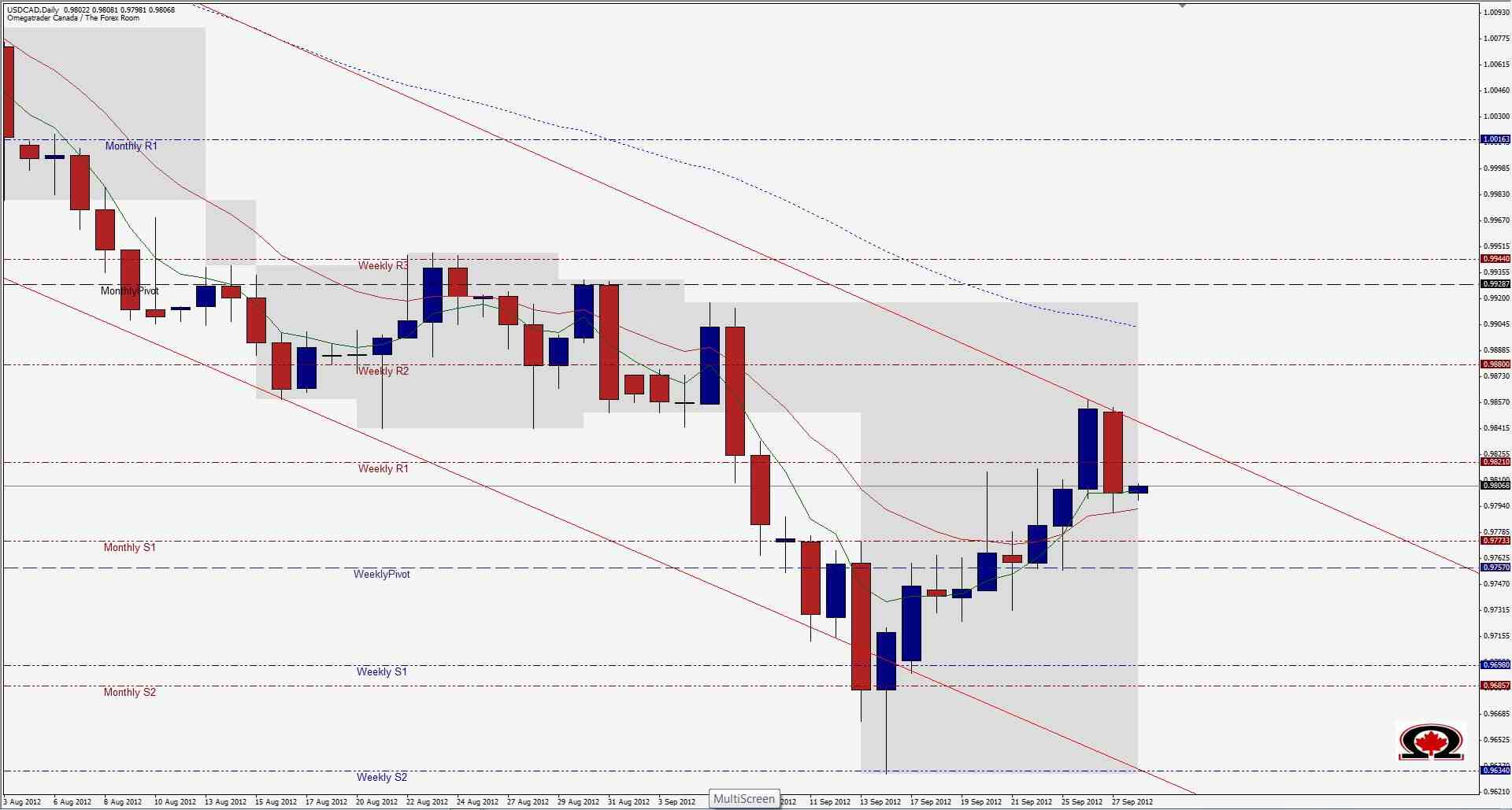
توجه زوج الدولار الأمريكي/الدولار الكندي للأسفل 2013


عكس الدولار الكندي إتجاهه اليوم، منتصراً في الجولة الأولى مقابل الدولار الأمريكي. جاء الإنعكاس عند مستوى 0.9860 وإنخفاضات مستوى شهر أغسطس وقمة القناة المتراجعة التي يمر فيها الزوج منذ شهر يونيو. أفتتح السعر يوم أمس عند هذا المستوى وواصل التراجع وإختراق إنخفاضات اليوم السابق، وأغلق عند 0.9790. الدعم في الأسفل قوي أيضاً بوجود مستوى S1 الشهري والمحور الأسبوعي على بعد 26 نقطة فقط عند 0.9773 و 0.9757 على التوالي.
السيناريو المرجح هو أننا سوف نرى زوج الدولار الأمريكي/الدولار الكندي يتراجع إلى مستوى 0.9745 على الأقل قبل أن يختبر قاع القناة وأدنى مستوى له خلال 12 شهر عند 0.9632 الذي تم الوصول له قبل أسبوعين. القاع المزدوجة عند أدنى مستوى خلال 12 شهر تعتبر إحتمالية كبرى، ولكن إذا تم إختراق ذلك المستوى، فإن هناك فراغ تقني وصولاً إلى أدنى مستوى خلال عام 2007 عند 0.9056.
مع محاولة الولايات المتحدة بدفع الدولار نحو الأسفل لدعم الإقتصاد وزيادة الصادرات، فإن هناك إحتمالية كبيرة بأن هذا قد يحدث قريباً. إذا تغيرت العوامل الأساسية وشهدنا تدفق المستثمرون عائدين إلى حالة "العملة الآمنة" للدولار الأمريكي، فقد نرى إرتفاعاً في الدولار يرفع هذا الزوج نحو الأعلى. وإذا تم إختراق مستوى 0.9880، سوف يتم أيضاً إختراق القناة الهابطة وسوف تكون الأسعار الأعلى محتملة.
توقع المقاومة عند 0.9880 بوجود المحور الشهري عند 0.99287.
الرسم البياني لزوج الدولار الأمريكي/الدولار الكندي

USD

USD